The Hidden Architecture: How the Cell Membrane Shapes Life

Table of Contents
- The Complete Overview of the Cell Membrane
- Historical Background and Evolution
- Core Mechanisms: How It Works
- Key Benefits and Crucial Impact
- Major Advantages
- Comparative Analysis
- Future Trends and Innovations
- Conclusion
- Comprehensive FAQs
- Q: How does the cell membrane maintain its fluidity in extreme temperatures?
- Q: Can artificial cell membranes be created in labs?
- Q: What happens when the cell membrane is damaged?
- Q: How do viruses exploit the cell membrane?
- Q: Are there membrane-specific treatments for diseases?
- Q: Can membrane research impact renewable energy?
The cell membrane isn’t just a boundary—it’s the unsung architect of life’s fundamental processes. Every second, billions of these fluid, self-sealing barriers regulate what enters and exits a cell, dictating survival, communication, and even disease progression. Without the cell membrane’s precision, neurons wouldn’t fire, immune cells wouldn’t patrol, and pharmaceuticals would fail to target their marks. Yet despite its critical role, its intricacies remain underappreciated outside specialized labs.
This delicate barrier is a masterpiece of molecular engineering: a double-layered lipid matrix embedded with proteins that act as gates, sensors, and signaling hubs. Its fluidity isn’t accidental—it’s a dynamic system that adapts to temperature, stress, and environmental cues, ensuring cells remain functional from the Arctic to the human gut. Even its breakdown, as seen in conditions like cystic fibrosis or Alzheimer’s, reveals how fragile the balance between order and chaos truly is.
The cell membrane’s influence extends beyond biology. Its principles underpin drug delivery systems, synthetic biology, and even nanotechnology. Understanding its mechanics isn’t just academic—it’s the key to unlocking breakthroughs in medicine, energy, and materials science. Below, we dissect its structure, mechanisms, and why its study remains one of science’s most vital frontiers.
The Complete Overview of the Cell Membrane
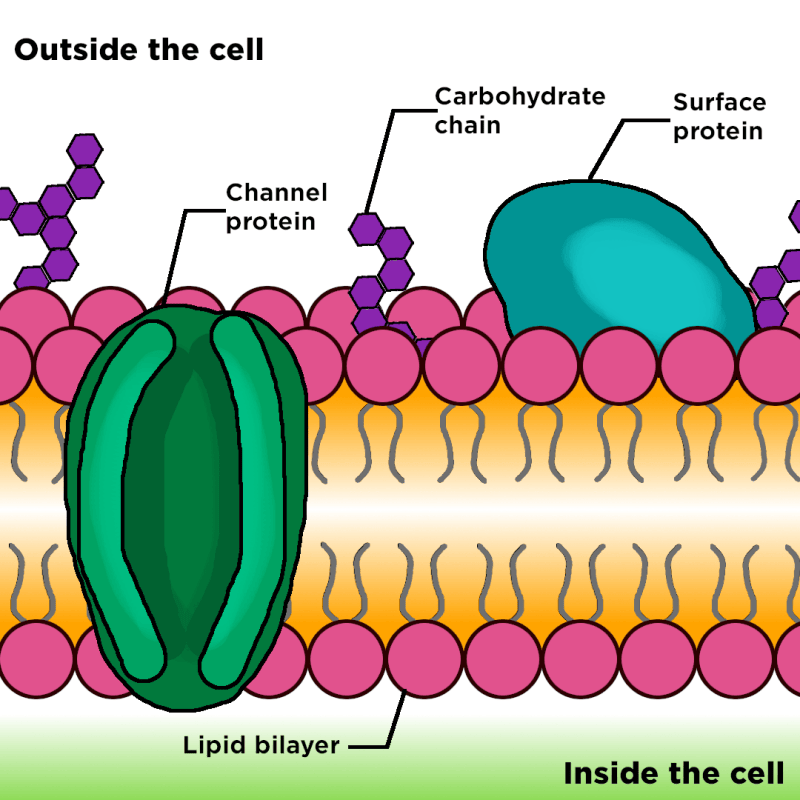
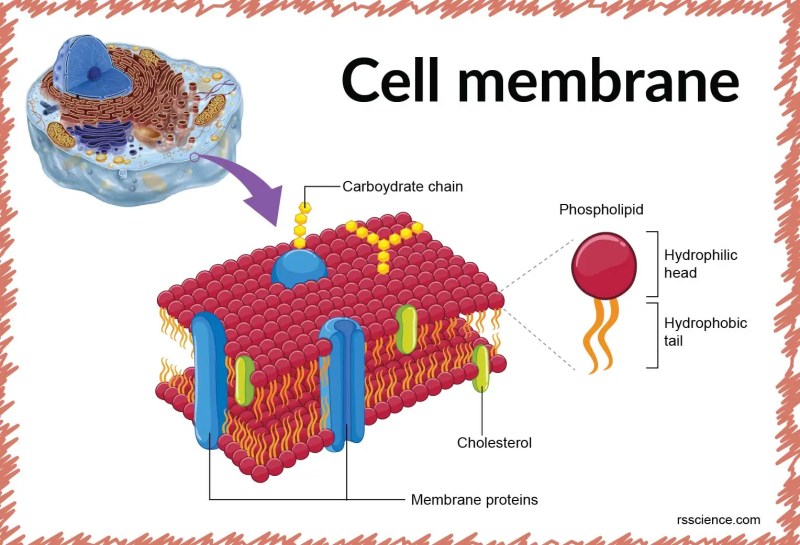
The cell membrane is the first line of defense and communication for every living cell, a semi-permeable barrier that maintains homeostasis while enabling selective exchange. Composed primarily of phospholipids arranged in a bilayer, it incorporates cholesterol for stability and a mosaic of proteins that facilitate transport, signaling, and structural support. This fluid mosaic model, proposed in 1972, revolutionized cell biology by illustrating the membrane’s dynamic, ever-shifting nature—a far cry from the static "railroad track" model of earlier decades.What makes the cell membrane extraordinary is its dual role as both a physical shield and a biochemical interface. On one side, it protects the cell’s interior from external toxins and mechanical stress; on the other, it hosts receptors that detect hormones, neurotransmitters, and even pathogens. Disruptions here—whether through genetic mutations, environmental toxins, or infectious agents—can cascade into systemic diseases. For instance, defective membrane proteins in diabetes impair insulin signaling, while viral entry often hijacks these very pathways to infiltrate cells.
Historical Background and Evolution
The concept of a cell membrane emerged from 19th-century microscopy, when scientists first observed that cells appeared to have defined boundaries. However, it wasn’t until the 1920s that the idea of a "unit membrane" gained traction, thanks to electron microscopy revealing a trilaminar structure. The breakthrough came in 1972 with the fluid mosaic model by S.J. Singer and Garth L. Nicolson, which proposed that the membrane was a fluid, heterogeneous sea of lipids with embedded proteins—an idea that still dominates modern cell biology.Evolutionarily, the cell membrane predates even the first cells. Fossil evidence suggests lipid vesicles, precursors to cellular membranes, formed spontaneously in primordial oceans, encapsulating genetic material and kickstarting life’s emergence. Over billions of years, these membranes evolved to incorporate proteins, carbohydrates, and specialized lipids, enabling multicellularity and complex organisms. Today, studying ancient membrane proteins in extremophiles—organisms thriving in extreme heat or acidity—offers clues to how early life adapted to Earth’s harsh conditions.
Core Mechanisms: How It Works
At its core, the cell membrane operates through three fundamental mechanisms: selective permeability, protein-mediated transport, and signal transduction. The phospholipid bilayer’s hydrophobic core repels water-soluble molecules, forcing them to traverse via channels or carriers. Small, nonpolar molecules like oxygen and carbon dioxide diffuse passively, while ions and large molecules rely on ATP-driven pumps or facilitated diffusion through transmembrane proteins.The membrane’s fluidity—its ability to shift and reshape—is critical for cellular processes. Cholesterol, for instance, modulates this fluidity, preventing membranes from becoming too rigid in cold environments or overly fluid in heat. Additionally, membrane proteins like G-protein-coupled receptors (GPCRs) act as molecular switches, converting external signals (e.g., light, odorants) into intracellular responses. Disruptions in these pathways, such as in cancer or neurodegenerative diseases, often stem from malfunctions in membrane-associated proteins.
Key Benefits and Crucial Impact
The cell membrane’s contributions to life are impossible to overstate. It preserves cellular integrity, enables nutrient uptake, and facilitates waste removal—all while acting as a hub for biochemical signaling. Without it, cells would collapse into chaotic soups of macromolecules, and multicellular life as we know it wouldn’t exist. Even in medicine, the membrane’s properties are exploited: liposomal drug delivery systems, for example, use artificial lipid bilayers to shield medications and improve targeting.The membrane’s role in disease is equally profound. Membrane-bound receptors are prime targets for pharmaceuticals, from statins that block cholesterol uptake to monoclonal antibodies that neutralize viral entry points. Conversely, membrane dysfunction underlies conditions like multiple sclerosis (where immune cells attack myelin, a membrane-like sheath) and muscular dystrophy (caused by defective membrane proteins in muscle fibers).
"The cell membrane is not just a barrier; it’s a symphony of molecules where every component plays a role in the cell’s survival and communication." — Dr. Gerald Weissmann, Biochemist and Immunologist
Major Advantages
- Selective Barrier: Regulates ion gradients essential for nerve impulses, muscle contraction, and cellular metabolism.
- Signal Transduction Hub: Hosts receptors for hormones, growth factors, and neurotransmitters, enabling rapid cellular responses.
- Structural Support: Anchors cytoskeletal elements, maintaining cell shape and enabling movement (e.g., in white blood cells).
- Energy Efficiency: Passive transport (e.g., diffusion) minimizes energy expenditure, while active transport ensures critical molecules enter against concentration gradients.
- Adaptability: Fluidity allows membranes to fuse (e.g., in exocytosis) or repair damage, a trait critical for cell survival in hostile environments.
Comparative Analysis
| Feature | Prokaryotic Cell Membrane | Eukaryotic Cell Membrane |
|---|---|---|
| Complexity | Simpler, lacks sterols (except in some archaea). | More complex, contains cholesterol (animals) or phytosterols (plants). |
| Protein Content | Fewer embedded proteins; transport relies on porins. | Diverse proteins for signaling, transport, and adhesion. |
| Functional Roles | Primarily nutrient uptake and waste export. | Specialized roles: synaptic transmission, immune defense, hormone response. |
| Repair Mechanisms | Limited; relies on rapid membrane turnover. | Advanced: Vesicle-mediated repair and endocytosis. |
Future Trends and Innovations
Advances in synthetic biology are pushing the boundaries of membrane science. Researchers are engineering artificial cell membranes with tailored permeability, potentially revolutionizing drug delivery and biosensors. For example, lipid nanoparticles (used in COVID-19 vaccines) leverage membrane-like structures to protect RNA payloads. Meanwhile, studies on membrane proteins in extremophiles could inspire materials for harsh industrial environments, such as desalination membranes resistant to corrosion.The intersection of membrane biology and AI is another frontier. Machine learning models are now predicting membrane protein structures with unprecedented accuracy, accelerating drug discovery. Additionally, CRISPR-based editing of membrane-associated genes may soon offer treatments for genetic disorders like cystic fibrosis, where a single defective protein disrupts the entire membrane’s function.
Conclusion
The cell membrane is far more than a passive boundary—it’s the linchpin of cellular life, a dynamic interface that governs everything from metabolism to immunity. Its study bridges disciplines, from structural biology to nanotechnology, and its applications span medicine, energy, and materials science. As research deepens, we’re beginning to appreciate its role not just in individual cells but in entire ecosystems, from microbial mats to human organs.Understanding the cell membrane isn’t merely academic; it’s essential for addressing global challenges, from antibiotic resistance to climate-resilient crops. The next decade may well see membrane-based technologies redefine healthcare, agriculture, and environmental sustainability—proving that the smallest structures often hold the biggest secrets.
Comprehensive FAQs
Q: How does the cell membrane maintain its fluidity in extreme temperatures?
The membrane adjusts fluidity through lipid composition: unsaturated fatty acids prevent packing in cold environments, while cholesterol stiffens membranes in heat. Some organisms also produce specialized lipids (e.g., branched-chain lipids in archaea) to stabilize structures under extreme conditions.
Q: Can artificial cell membranes be created in labs?
Yes. Scientists use techniques like electroformation to assemble lipid bilayers into vesicles, mimicking natural membranes. These artificial membranes are used in drug delivery, biosensors, and studies of membrane protein function. However, replicating the full complexity of eukaryotic membranes remains a challenge.
Q: What happens when the cell membrane is damaged?
Cells employ rapid repair mechanisms, such as patching damaged areas with vesicles or activating enzymes to reseal tears. Chronic damage—from toxins, infections, or genetic defects—can lead to cell death (apoptosis) or disease, depending on the severity and context.
Q: How do viruses exploit the cell membrane?
Viruses often hijack membrane proteins (e.g., ACE2 for SARS-CoV-2) to enter cells. Some, like influenza, fuse their lipid envelopes with the host membrane to release genetic material. Others induce membrane remodeling to form replication compartments or exit via budding through modified membranes.
Q: Are there membrane-specific treatments for diseases?
Yes. Lipid-lowering drugs (statins) target membrane cholesterol synthesis, while monoclonal antibodies block viral entry by binding membrane receptors. Emerging therapies use membrane-targeting peptides to deliver drugs directly to affected cells, minimizing side effects.
Q: Can membrane research impact renewable energy?
Absolutely. Membrane proteins in photosynthetic organisms inspire artificial systems for solar energy conversion. Additionally, biomimetic membranes—designed to mimic natural selectivity—are being developed for efficient water purification and fuel cells.
Leave a Comment
Comments are moderated before appearing. The data you submit is processed according to the Privacy Policy of Climate Columbia News.